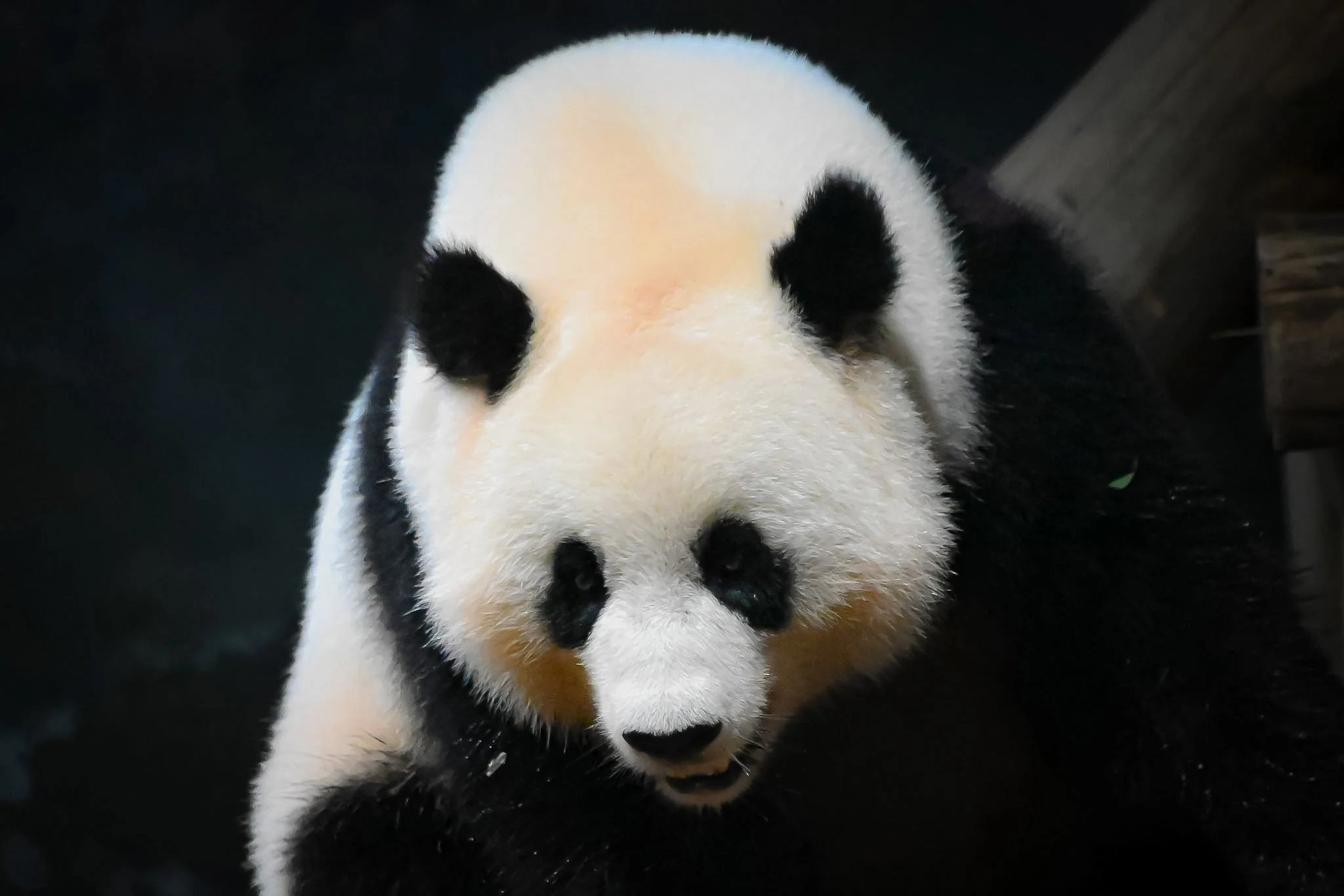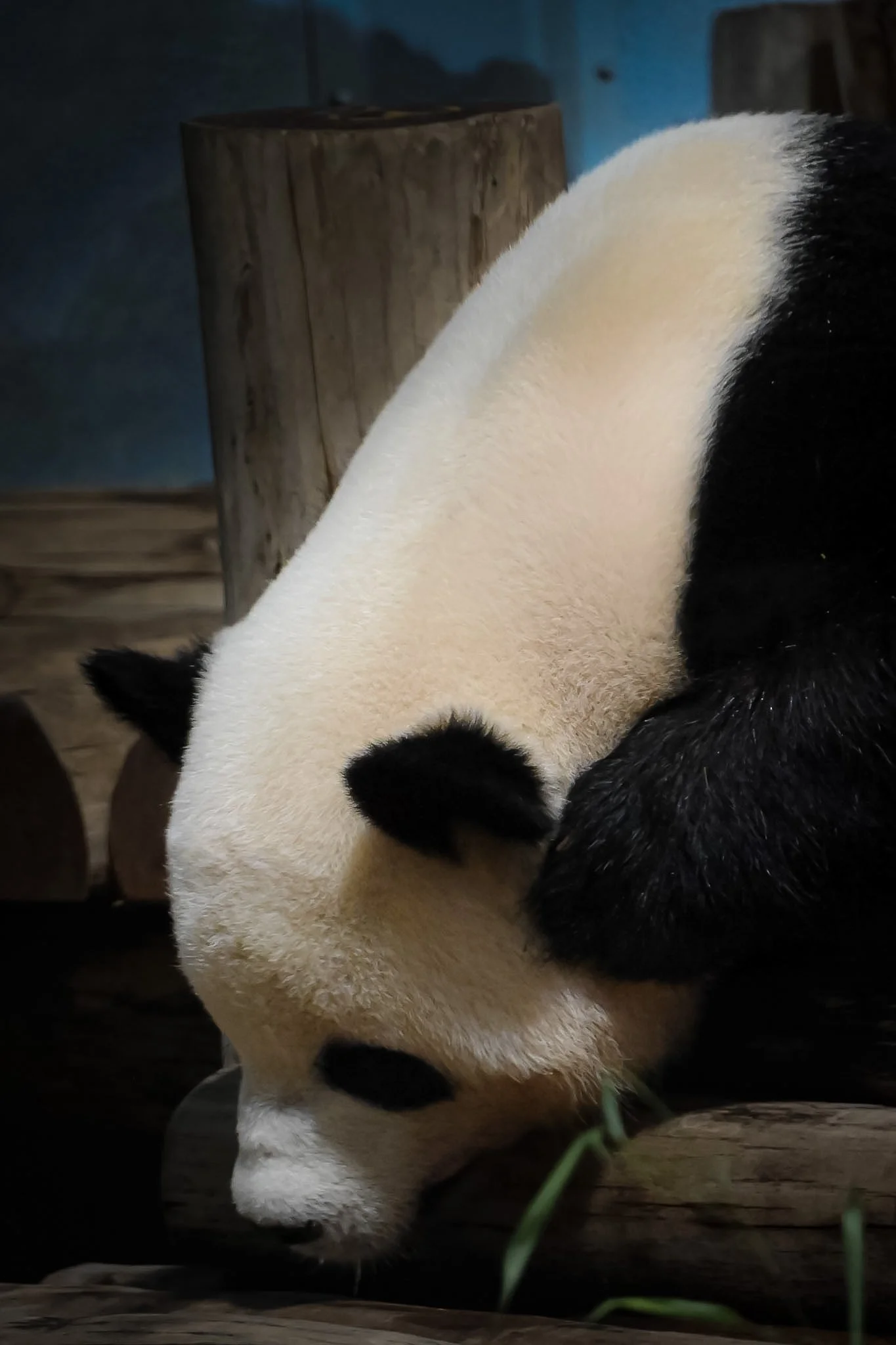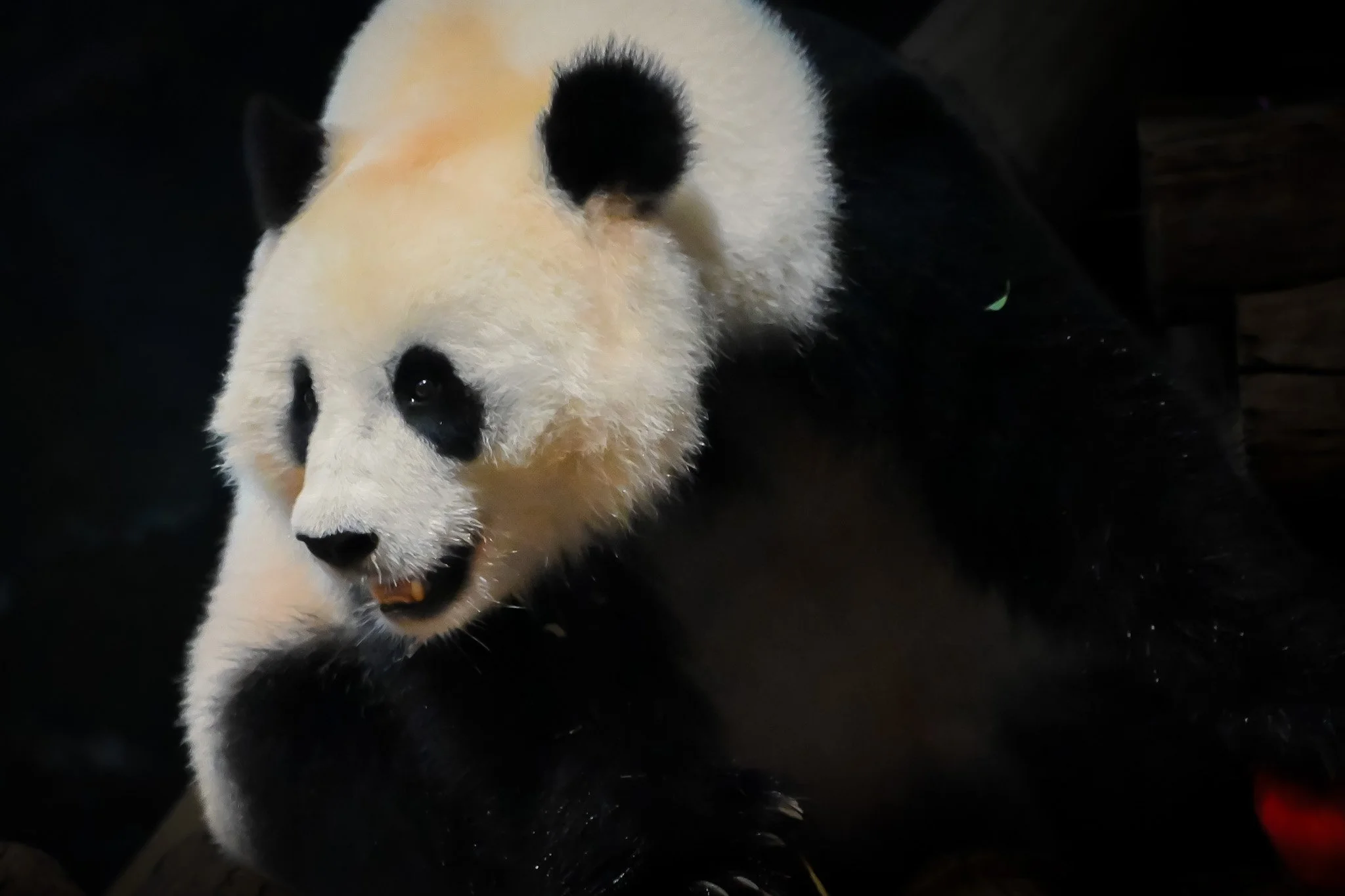
Giant Panda
Conservation Status: Vulnerable
Class: Mammalia
Order: Carnivora
Family: Ursidae
The Giant Panda, known for its black and white fur pattern, can be found in dense bamboo forests located in a few south central China mountain ranges including Sichuan, Shaanxi, and Gansu provinces. Because of their solitary behavior, it is believed that Giant Pandas never developed ways to communicate such as expressive faces, tails that can signal to other giant pandas, or even ears that can move forward or flatten. However, much of their communication is done through scent markings mainly to keep other giant pandas away, unless it is breeding season.
Uniquely enough, giant pandas have a digestive system similar to that of carnivores despite having a diet like an herbivore. Because of this, giant pandas need to consume a large amount of food in order to make up for lost nutrients. For example, according to the Smithsonian’s National Zoo and Biology Conservation Institute, giant pandas eat anywhere from 70 to 100 pounds a day.
Although giant pandas are solitary for the most part, they have been observed to form groups within territories. However, giant pandas avoid socializing with other giant pandas who are not within their group.
On Conservation:
The giant panda’s largest threat to their survival is the destruction of their habitat due to deforestation for agriculture and timber. This has led to small groups of pandas becoming isolated from each other, and ultimately makes it hard for giant panda populations to rebound in combination with their solitary nature.
In order to grow the giant panda populations, many organizations like the Smithsonian’s Zoo and Conservation Biology Institute perform research on giant pandas. This includes behavioral observation and advanced reproductive biology techniques such as artificial insemination of the females. In the wild, scientists observe and conduct surveys of giant pandas utilizing geographic information systems (GIS) and other tools for tracking, i.e. tracking collars.