Fishing Cat
Conservation Status: Vulnerable
Class: Mammalia
Order: Carnivora
Family: Felidae
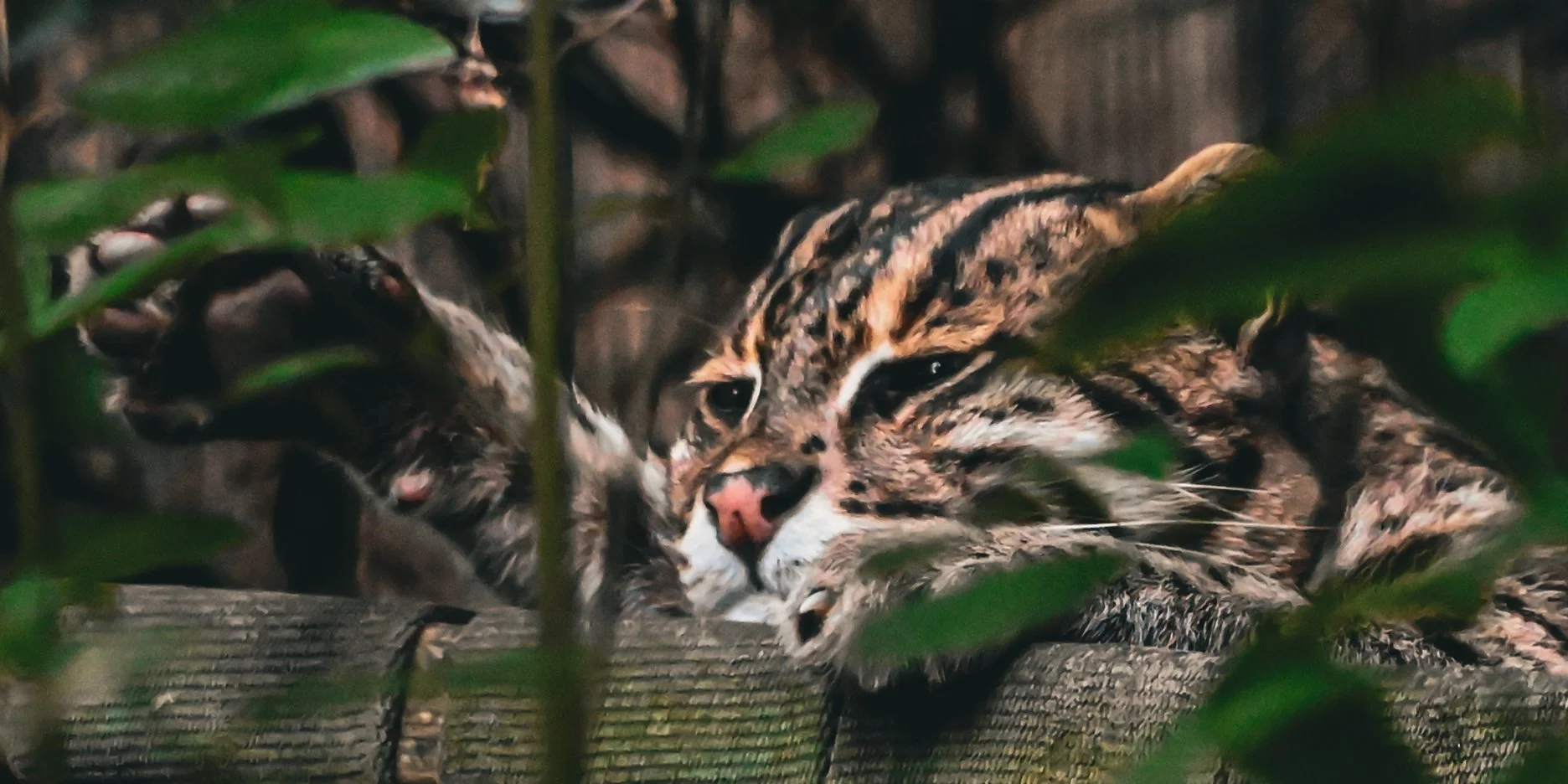
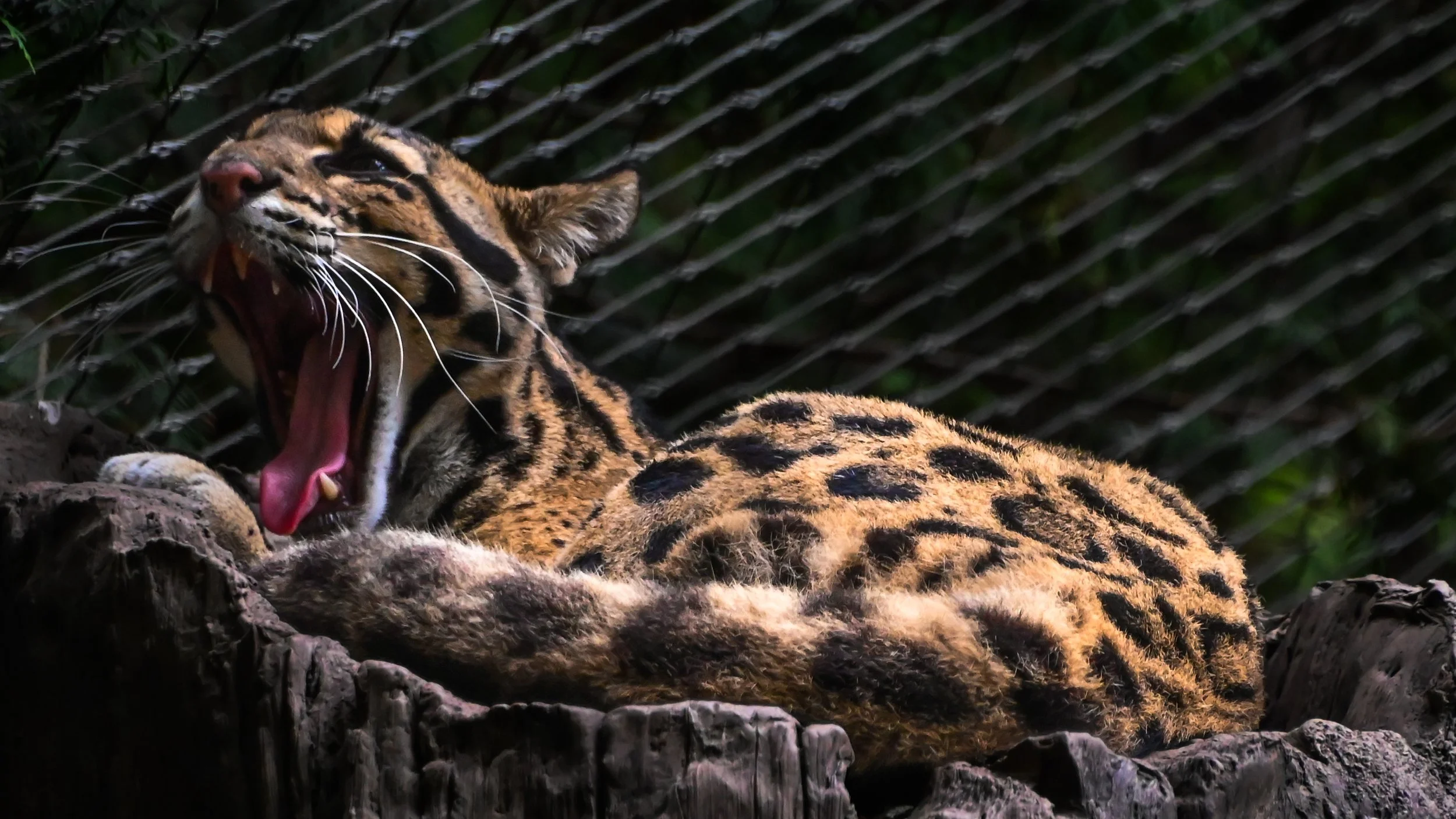
Measured to be one of the largest of the species of small cats and camouflaged with a gray-brown colored coat and covered in black spots and stripes, the Fishing Cat is an effective predator. With partially webbed front toes and claws that naturally protrude slightly when retracted, Fishing Cats are made to swim. Moreover, adding to its aquatic nature, they possess tightly packed hairs that sit against the skin creating a dense layer. This layer keeps the Fishing Cat warm in cold water by preventing water from reaching the skin.
Although found all across South and Southeast Asia, Fishing Cat sightings are rare and few. To put it into perspective, the last recorded camera trap capture in Vietnam was in 2000, according to the Smithsonian’s National Zoo and Conservation Biology Institute. Fishing Cats can be found in marshes, swamps, and mangrove forests, however, their habitats are actively being encroached by human development. Because of this, Fishing Cat sightings in urban areas have increased.
Fishing Cats, as suggested by their name, fish for food in bodies of water. Waiting at the edge of a pool of water, they scoop up their prey using their claws to secure their catch. In classic cat manners, they have been observed to play with their food in shallow waters.
On Conservation:
The Fishing Cat’s habitat is threatened by encroaching human settlement in wetlands. Furthermore, their habitat is largely affected by deforestation. Deforestation results in the land’s decreased ability to replenish its water supply. As a result, Fishing Cat populations become isolated and eventually decline. In addition, Fishing Cats are also largely threatened by poaching and the development of urban areas. With the encroachment of urban areas, there has been an increase in road kill and runoff into water sources in which Fishing Cats rely on for food.
What can you do? Avoid animal-skin products, or products made from animals overall. In doing so, you positively contribute to the long fight against poaching and illegal wildlife trade. Furthermore, share and educate those around you. Playing your part in spreading awareness can significantly impact the Fishing Cat’s protection.